
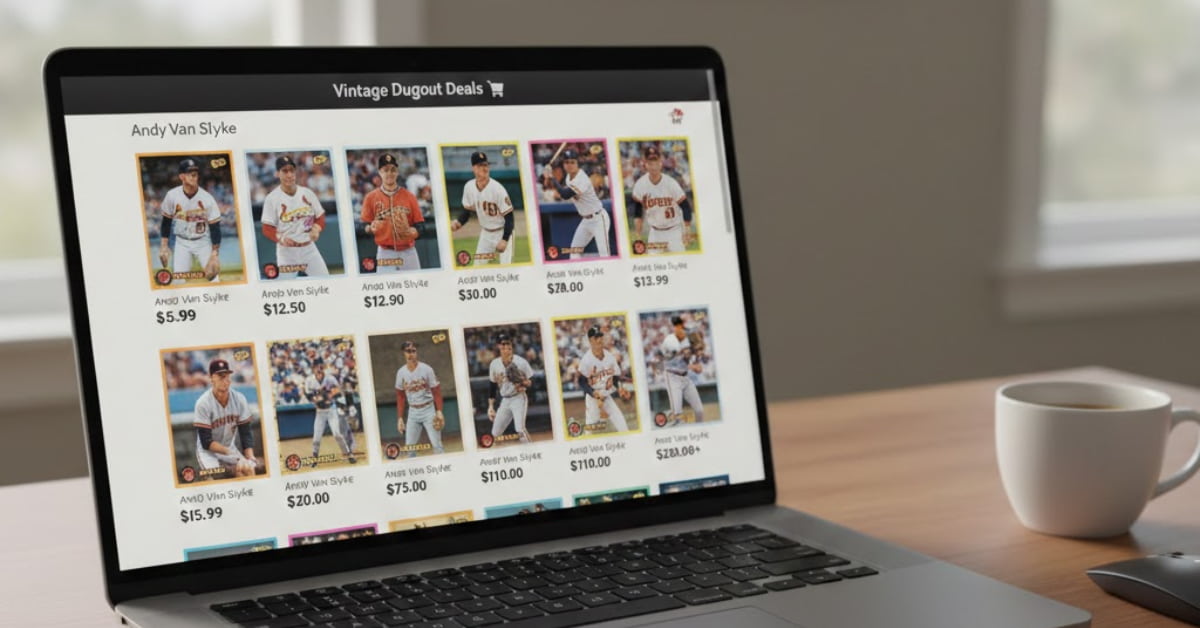
Andy Van Slyke’s baseball card value explained for 2025. Rookie cards, PSA prices, rare editions & honest buying advice from real experience.
Start With the Struggle (Where I Got Stuck)
I didn’t plan on researching Andy Van Slyke baseball cards in depth.
It started casually.
One evening, I was browsing old MLB cards—mostly 80s and early 90s players I remembered watching as a kid. Andy Van Slyke’s name popped up repeatedly. Some cards were priced at just a few dollars. Others—especially graded ones—were shockingly higher.
That’s when the confusion kicked in.
I remember thinking:
-
Why is this Andy Van Slyke card price so low?
-
Why is another card of the same player 10x more expensive?
-
Is Andy Van Slyke card worth collecting at all?
At first, I assumed the market was random.
I also made a wrong assumption that many beginners make:
Old player + vintage card = valuable card
That assumption almost cost me money.
I nearly bought a card just because it looked old and had a nostalgic design. No grading. No research. Just vibes. Thankfully, I paused—and that pause changed everything.
The Turning Point (What Finally Made Sense)
The real shift happened when I stopped asking “How much is this card listed for?” and started asking:
“Why is this card priced this way?”
That small mindset change unlocked clarity.
I noticed patterns:
-
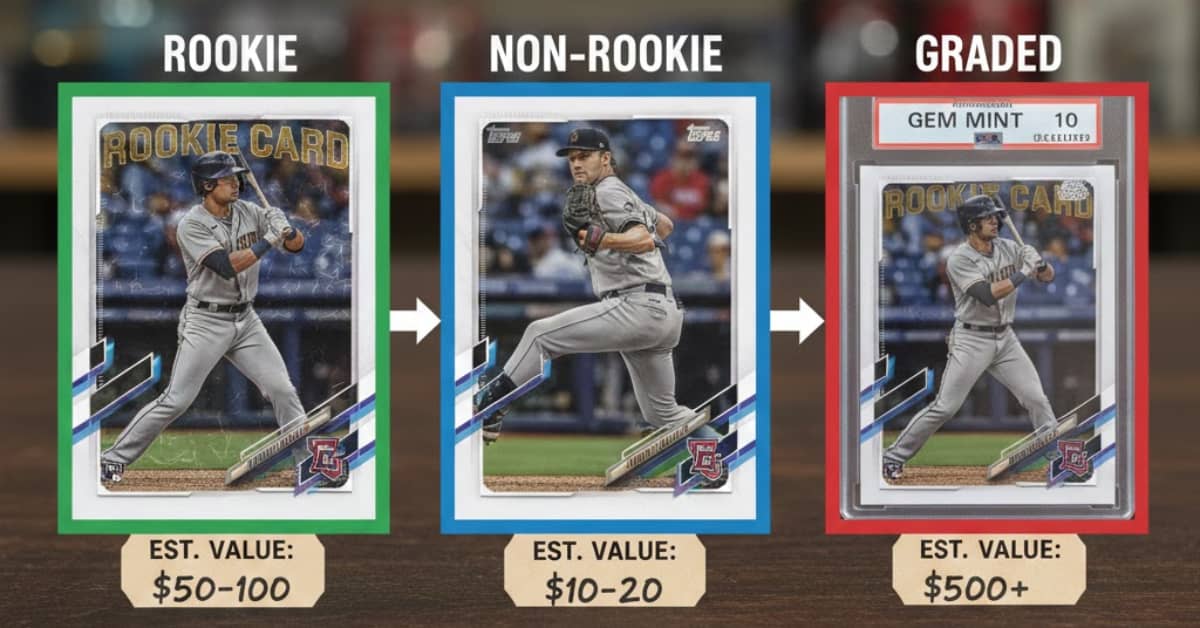
Rookie cards consistently held higher value
-
PSA graded cards sold faster
-
Mint condition mattered more than the year alone
Suddenly, the Andy Van Slyke baseball card value wasn’t confusing anymore—it was logical.
Emotionally, it felt like relief.
Instead of feeling lost, I felt in control.
The biggest realization?
👉 Andy Van Slyke’s card worth depends more on condition and grading than popularity.
Where It Wasn’t Perfect (The Honest Reality)
Even after I understood the basics, things didn’t suddenly become easy.
I expected prices to make sense instantly, but they didn’t.
One week an Andy Van Slyke card would sell fast, the next week it wouldn’t move at all.
That uncertainty was frustrating at first.
I realized prices weren’t fixed or predictable.
They shifted with recent sales, grading reports, and collector interest.
There was no “guaranteed” value I could rely on.
Accepting that reality helped me stay realistic and patient.
The Actual Solution (What I Actually Did That Worked)
This is where theory ends and real practice begins.
Step 1: I Focused on the Rookie Card First
If you’re researching Andy Van Slyke rookie card value, you’re already asking the right question.
Why rookie cards matter:
-
First official appearance
-
Long-term collector demand
-
Historical relevance
Non-rookie cards can be nice—but rookie cards anchor value.
Step 2: I Learned to Judge Condition Brutally Honestly
I stopped convincing myself that a card was “near mint” when it wasn’t.
I checked:
-
Corners (sharp vs rounded)
-
Centering
-
Surface scratches
-
Edge whitening
This is where Andy Van Slyke mint condition card searches actually make sense.
A single flaw can cut value in half.
Step 3: I Took PSA Grading Seriously
This step changed everything.
A PSA graded baseball card removes emotional bias.
It tells buyers exactly what they’re getting.
Key insight:
-
Andy Van Slyke PSA 10 value is rare and premium
-
PSA 9 is often the sweet spot
-
Raw cards = uncertainty
I personally found PSA 9 cards to be the most practical option.
Step 4: I Compared Sold Listings Only
I ignored optimistic asking prices and focused on:
-
Recently sold eBay listings
-
Auction results
-
Repeat sale patterns
That’s how I learned the real Andy Van Slyke card worth.
Real-Life Tips That Actually Helped
-
PSA 9 > Raw (almost always)
-
Rookie + grading = stability
-
Don’t chase “rare” labels without proof
Common Mistakes I See (and Made)
-
Overpaying for nostalgia
-
Ignoring grading population reports
-
Assuming all Andy Van Slyke baseball cards are investment-grade
Who This Approach Is For
Best for:
-
Collectors seeking steady value
-
Buyers who want clarity
-
Long-term hobbyists
Not ideal for:
-
Quick flippers
-
Gamble-based buyers
-
Anyone expecting instant profit
Things People Rarely Mention (Hidden Truths)
“All Vintage Cards Are Valuable” — Not True
Most vintage Andy Van Slyke baseball cards are affordable because supply is high.
Age alone doesn’t create value.
The Population Report Factor
This was an eye-opener.
Some Andy Van Slyke cards look rare—but aren’t. Others have surprisingly low PSA 10 counts, which quietly supports prices.
This matters for:
-
Most valuable Andy Van Slyke card
-
Andy Van Slyke rare baseball card research
The Condition Ceiling
Some cards simply don’t grade well due to printing issues.
No matter how hard you try, a PSA 10 might be unrealistic for certain releases. Knowing this prevents frustration.
Andy Van Slyke Baseball Card Value in 2025 (What to Expect)
Conclusion
If you’re feeling confused by mixed pricing and conflicting advice, it doesn’t mean you’re behind—it usually means you’re still early in the process. I learned the real Andy Van Slyke baseball card value by slowing down, making a few mistakes, and then correcting them one decision at a time. There was no shortcut, just better questions and more patience over time. You don’t need to buy everything, and you don’t need to chase rarity to feel confident. What actually helps is clarity—understanding why a card is priced the way it is. Start small, observe carefully, and let experience do the rest. Confidence comes naturally after that.